MBA 360° Resource Kit
Tips, Tools, and Expert Advice for Your MBA Journey
Preparing to Apply
Get the GMAT/GRE Done Early to Focus on Your MBA Story
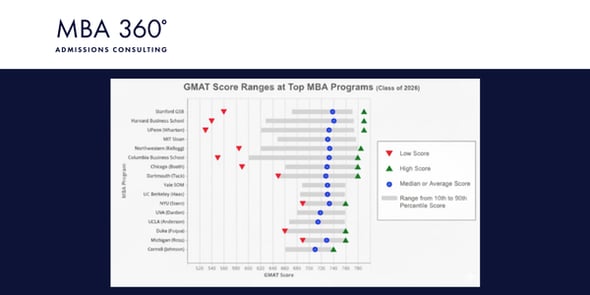
What is a Good GMAT Score?
If you're applying to business school, one question is almost guaranteed to pop into your mind (and maybe keep you up at night):
“Is my GMAT score good enough for my top target schools?”
It’s a fair question—after all, GMAT scores are one of the most visible and most talked-about elements of an MBA application.
MBA Resume Examples
MBA programs want to see more than just where you’ve worked; they want proof that you’ve made an impact.
Your résumé needs to show leadership, measurable results, and a clear trajectory that all says “rising business leader,” not just another job applicant. If yours reads like a basic LinkedIn profile, it’s time for an upgrade.
What is an MBA Admissions Consultant?
Each year, thousands of highly qualified candidates compete for admission and scholarship money at top MBA programs.
The competition is fierce and stakes are high, so many candidates seek expert advice to help make their applications as competitive as possible. MBA admissions consultants are professionals who can...
Building Your Strategy
Your Story Is Your Strategy: Crafting a Compelling MBA Narrative
It's Not About You
The strongest candidates don’t just express who they are. They demonstrate why they make sense for a particular program, right now.
This isn’t a book of templates, buzzwords, or inspirational anecdotes. It’s a practical guide to understanding how admissions committees think—and how to position yourself accordingly.
How to Decide Where to Get Admissions Advice
Applying to business school can feel like a full-time job: multiple essays, recommendation letters, resumes, test prep, and interviews.
As if that’s not stressful enough, there’s always a time crunch as application deadlines draw near and you’re rushing to check EVERYTHING before you hit “submit’ and surrender control to the MBA admissions committee.
Strategy Questionnaire
This comprehensive questionnaire serves as a reflective tool to help you identify the defining moments and unique value propositions of your candidacy.
By exploring your professional impact, personal strengths, and long-term career vision, you can begin to bridge the gap between your past experiences and your future MBA goals.
Developing Your Story
Storytelling Frameworks Sharpen MBA Essays
A strong résumé is only one part of a successful MBA application—to truly capture the admission committee’s attention, you’ll need compelling essays that reveal your authentic self. And that’s where storytelling enters.
Your application reader needs to make an informed decision on your ability to succeed in the program and in your next position, but only has limited information.
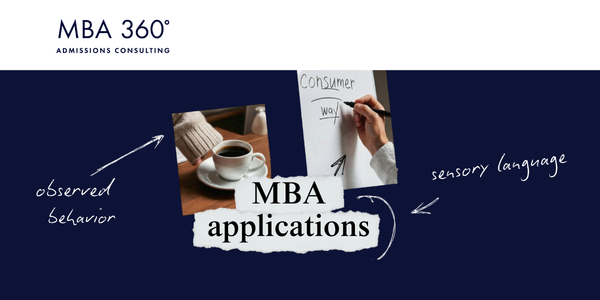
Add Sensory Language to your MBA Application
Your MBA application is an exercise in persuasion—so why not use the same tools that drive viral engagement?
Research shows that sensory language significantly increases influence and impact.
From your personal essays to your letters of recommendation, learn how to replace generic claims with vivid, "observable" details that resonate with admissions officers.
Knowing When to Get Expert Advice
MBA applicants constantly wonder: Am I good enough? Is my application strong enough?
Knowing when to seek expert guidance can be the difference between second-guessing every step and submitting with confidence.
Don’t wait until regret sets in—learn how timing the right support can shape your MBA outcome.
Navigating the Process
Quick Guide to Interview Questions
Step off the page during your interview. Don't fear "Tell me about yourself" or tricky behavioral questions. Instead of seeking the "right" answer, focus on authentic connection. Use the STAR method and high-impact questions to walk in with poise.
Should You Apply in Round 3?
Facing a Round 3 deadline? You've likely heard the warnings. Maybe work demands or a late realization delayed your plans. It feels like you've missed the boat, but the calendar is not your enemy.
Coping with Detours
How Dr. Phil Captures the Admissions Rollercoaster
Explore the psychological "highs" and "lows" of MBA admissions. This post delves into the core human needs for acceptance and the resilience required to navigate the rollercoaster of business school decisions.
Media Coverage
Many traditional full-time MBA programs prefer that students have roughly five to six years of work experience when they enroll, but that will vary on an individual basis, says Barbara Coward, founder of MBA 360° Admissions Consulting. “MBA students learn just as much from their peers as they do from their professors, which is why some work experience is typically encouraged,” Coward says.
Barbara Coward, founder of MBA 360° Admissions, a consultancy, argues that employers love “a winning combo” of an undergraduate business degree and a one-year specialised masters with quantitative skills such as business analytics — a route that is cheaper for student and company alike than MBAs. But still, she admits, “I think the MBA has that status that is alluring.”
Founder of MBA 360°Admissions Barbara Coward agrees that rankings can be generally helpful for MBA applicants in deciding where to target. Though, she says “it’s essential to understand the details of each ranking methodology. If a ranking’s input criteria and weightings don’t align well with what’s important to you, that ranking won’t be very useful.”